Some time ago, one of the worst nightmares for an art collector occurred in a museum in Taipei (China). A 12-year-old boy was walking among a collection of paintings when he tripped and landed on top of a painting by the Italian painter Paolo Porpora. According to The Guardian newspaper, the consequences for the painting, valued at 1.3 million dollars, were fatal as it was torn by the impact. The work was destroyed and the event was recorded by one of the security cameras, which made it go viral on social networks. Apart from the bad time the boy had, there were no major consequences for him or for his parents, since, as explained by the person in charge of the exhibition, Sun Chi-nsuan, the boy was not blamed for his act and the insurance of the exhibition was in charge of paying for the damage and the restoration of the work.

The importance of having a policy that covers damage to a work of art is evident in this type of situation. Having an insurance policy prevented a claim for millions of dollars. Therefore, even if you only have one or several pieces of art in your home and they are never exhibited in any museum, it is a priority that they are protected.
What can be assured?
Although it depends on the insurance company with which you contract the policy, you can insure any object that is considered a work of art. Within this consideration are pictures, paintings, antique furniture, tapestries, sculptures or even engravings, among other objects. However, you must bear in mind that the insurance company will appraise the work of art before the insurance is taken out. Its value will be determined by its market price or other circumstances such as its author, period or technique. For this purpose, the companies use expert appraisers who will value it and appraise it at its real value in order to establish the premium to be paid and the compensation to be received in the event of a loss.
What conditions exist?
When insuring the work of art, the insurance company will most likely ask for the certificate of authenticity of the piece. In addition, to calculate the insurance premium you may also be asked for the title of the work, author, owner, beneficiary, measurements, value or location.
On the other hand, the insurance company mayrequire that the place where the piece is going to be kept has certain security measures such as an armored door, alarm with central monitoring connection, fire extinguisher or even bars on all its windows. In this way, in the event of a possible accident, the piece would have more security and it would be more difficult for it to be damaged. In addition, if the work is going to be taken out of the house where it is kept and exhibited in a gallery, the insurer will probably want to know other information such as the transport company that will be in charge of moving it. In addition, they will also ask for the route it will take, the place of pick-up and return, and the time it is to remain at the new destination.
What types of insurance can be contracted?
Depending on whether the works of art you own are going to leave home to be exhibited in museums or galleries or, on the contrary, are going to remain at home, there are different types of insurance, the most commonly contracted are:
Nail to nail insurance.
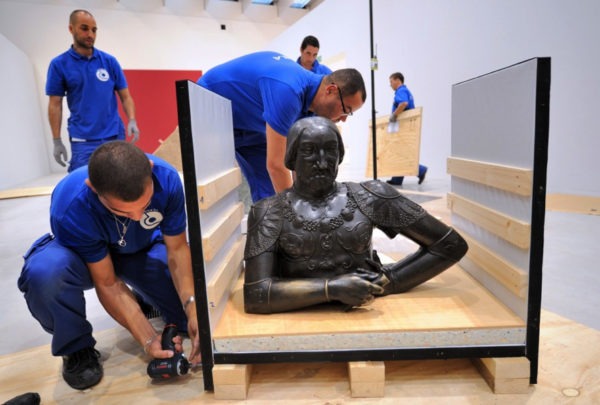
This type of insurance is designed for works of art that are moved from one place to another and are exhibited in galleries on an itinerant basis. Specifically, it is responsible for protecting and guaranteeing the perfect maintenance of the object from the time the work is prepared to be moved until the exhibition is dismantled and returned to its usual place. In short, the policy protects the transport from the usual place, the stay and the packing and unpacking process.
Fully comprehensive insurance.
This policy is in charge of protecting the work from possible losses caused by third parties. It usually includes coverages such as theft or physical damage.
Coverage to be considered.
There are different types of coverage in specialized art insurance, which usually vary from one company to another. You should take note of them before taking out the insurance:
- English clauses: protect the work of art both in land and sea transport and insure it against different weather conditions, as well as strikes or war conflicts.
- Artistic depreciation: this guarantee covers the artistic depreciation that the work may suffer in the event of a loss covered by the policy. For example, if the painting loses its value due to damage, the owner would receive compensation.
- Repurchase option: in the event that a work is stolen and the insurer assumes the indemnity, with this coverage the owner will have the option to repurchase it if it turns up.
- Detachment: this coverage protects the entire work. For example, some pieces are made up of several objects, such as artistic tableware. If one of them is damaged, the insurer will guarantee indemnity for the damaged piece.
- Frames: often the frames in which a work of art is located are also considered to be of high value and constitute a true piece of craftsmanship. For this reason, some insurance companies guarantee the replacement of frames that are damaged by accident and take charge of their repair. The same applies to glass, if it is damaged, the company will replace it.
- Terrorism: most insurers will cover damage to works of art caused by a terrorist attack.

Exclusions
You should pay attention because not all policies include damage resulting from poor conservation of the work, such as natural wear and tear, aging, gradual deterioration, mold or oxidation, pollution or contamination. In addition, improper packaging may also cause damage.
We find the insurance you need.
If you are looking for an insurance policy for Works of Art, you should make sure that it is a policy that adapts to the type of artwork you have in your home or to the collection you are going to exhibit. It is not the same to have a piece of art in a private home and never leave it, as it is to have several works and exhibit them in various galleries around the world. Each case will require a different type of coverage. To find the best insurance for your art collections we recommend you to let yourself be advised by agents or by an insurance brokerage such as Grupo Galilea with a wide experience in this type of risks.