Several provinces of Spain are this week on alert for risk of snow, rain and cold weather. These meteorological conditions may cause numerous material damages to citizens in their homes or vehicles. But who is responsible for the damages caused by a meteorological phenomenon and what does it mean when an area is declared a catastrophic area.
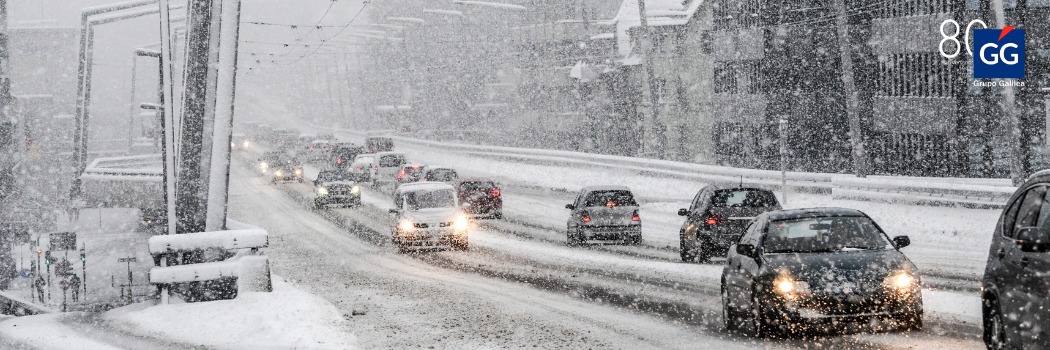
Where to claim storm damage?
When a storm, snowfall or meteorological phenomenon that causes damage occurs, the citizen still does not know whether or not a catastrophic zone will be declared and what damage will be caused. In this sense, it is important to be clear that it is not necessary to wait for the declaration of a catastrophic area to start the procedures.
Therefore, if a citizen has been affected, these are the steps to follow to make a claim:
- Report the damage as soon as possible to your home, car or other insurance company, depending on the place where the damage occurred. The insurance companies will only cover those damages and damages caused that are within the contracted coverage.
- Contact as soon as possible the Insurance Compensation Consortium, which provides coverage for extraordinary risks not covered by the policy and which are included in its applicable regulations, for example, the following natural phenomena: earthquakes and tidal waves, extraordinary floods, volcanic eruptions, atypical cyclonic storms and falls of sidereal bodies and aerolites.
- Be attentive in case the declaration of catastrophic area is produced. If this is the case, you may also claim, based on the provisions of Article 21.2 of Law 17/2015, of July 9, of the National Civil Protection System "The aid for material damage will be compatible with those that may be granted by other Public Administrations, or with the compensation that may correspond under insurance policies, without in any case the overall amount of all of them may exceed the value of the damage produced".
What does it mean to declare a catastrophe zone?
In the event of natural phenomena such as heavy snowfall, ice, rain and other catastrophes that cause extensive damage, where the regional governments can request that the area be declared a "catastrophe" area.
A disaster area is one that has suffered personal or material damage due to a natural catastrophe such as snowfall, a volcano, a major flood or an earthquake, among other reasons, as well as those resulting from human action, causing a civil protection emergency.
Who is applying for the catastrophe zone?
It is the Autonomous Communities or the heads of the affected Public Administrations who are responsible for requesting the catastrophic zone, as well as the town councils. It will be the State Government who will agree the declaration by Royal Decree of the Council of Ministers, at the proposal of the Ministers of the Interior and Finance, together with the public administrations, to declare the catastrophic zone or zones.
This request should be made in the "recovery phase" of the disaster, when the immediate emergency response actions have been completed.
However, the denomination, according to the current legislation, is "declaration of area seriously affected by a civil protection emergency", as it is included in Law 17/2015 of July 9, 2015, of the National Civil Protection System.
In order to declare an area a disaster area, the government must first assess the "personal or material damage" following the event, as well as whether the event has paralyzed all or some of the essential public services and whether the living conditions of the population have been seriously disrupted.
What does it mean for citizens?
The fact that the State declares an area to be a catastrophic zone means that the State would be responsible for repairing material damage or providing aid to companies and workers, such as deferrals of social security contributions. It is important to bear in mind that these actions would not be considered as compensation, but rather as aid to alleviate the damage caused.
What is the procedure and what are the deadlines?
The granting of aid derived from emergency situations or of a catastrophic nature is governed by the provisions basically of Law 17/2015, of July 9, of the National Civil Protection System and by Royal Decree 307/2005, of March 18, which regulates subsidies in response to certain needs derived from emergency situations or of a catastrophic nature, and establishes the procedure for their granting.
First, the Government may request a report from the affected autonomous community or communities and assess the damage caused, in order to finally declare the area seriously affected by a civil protection emergency.
Secondly, citizens must apply for aid through the standardized forms published for this purpose in each specific case. It is common for offices to be set up in the City Councils to facilitate this task and provide advice to citizens.
The deadline is short. According to Royal Decree 307/2005, of March 18, 2005, the citizen would have a period of one month to submit the application through the standardized form. However, it will be necessary to look at each specific declaration and review the specific procedure and deadlines. Sometimes a longer term is established because it is considered, in view of the magnitude of the catastrophe, that such term would be insufficient.
Aid that can be provided by the government to a disaster area
- Assistance for personal injuries directly caused by the events.
- Aid to alleviate the destruction of or damage to homes directly caused by the events.
- The Government may adopt other measures, such as aid to individuals for damage to their homes and basic necessities caused by the phenomenon.
- Likewise, these may be aid for industrial, commercial and service establishments, ICO loans, tax exemptions and reductions.
- Labor and social security measures such as termination or suspension of employment contracts or temporary reductions in working hours directly caused by the emergency.
- Aid for damage to agricultural, livestock, forestry and marine aquaculture production.
- Likewise, many others are described in the aforementioned regulation of the National Civil Protection System.
What evidence must be provided
The request shall be made on the standard form approved for this purpose, accompanied by all the documentation deemed necessary for evidence purposes. The specific documents will depend on what we are claiming.
For example, in the case of damage to the dwelling, it will be necessary to provide a document that reliably proves the ownership of the affected dwelling, the type of damage with images or other evidence available; it is necessary to prove whether the dwelling has home insurance and if so, indicate the insurance company, whether compensation has been requested from the insurance company and, if it has been granted, provide documentation proving the amount received as compensation.