HOW ARE YOUNG PEOPLE STARTING OUT IN THE LABOR MARKET?
We live in an environment of constant change. The job market is becoming increasingly competitive, with 65% of today's students destined for jobs that do not yet exist. In addition, it is estimated that 85% of jobs in 2030 have not yet been invented.
In this context, it is crucial that organizations adapt to the new profiles of young employees and, at the same time, understand the needs and differences of the various generations that coexist in the work environment.
In fact, did you know that the order of priorities of each generation is very different?
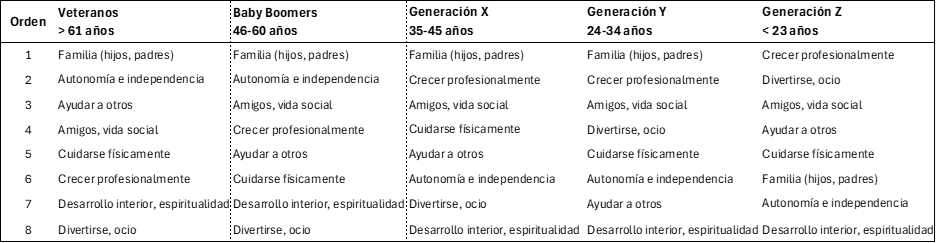
For the younger generation, growing professionally, having fun and maintaining a social life are priorities, while family and children take a back seat.
Because of this, they are more demanding with their working conditions, and social benefits are key in their choice of company. Companies can offer benefits such as flexible hours, training, insurance, childcare, and savings plans, which improve the quality of life of the employee and his or her family.
Ponemos a tu disposición la guía en pdf «Cómo retener el talento», un repaso detallado del nuevo entorno laboral para las nuevas generaciones y una lista de tips para conseguir atraer y retener el talento en tu empresa.
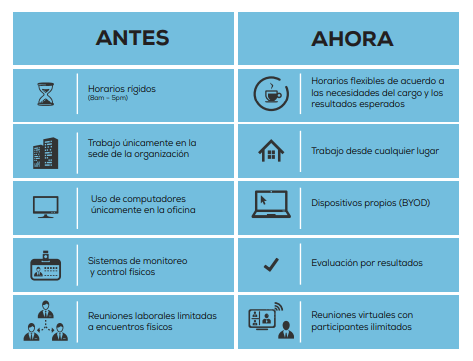
The labor market is undergoing significant transformations. Digitalization, telecommuting and increased competition for talent have redefined employee expectations and needs.
We have long been detecting problems in the recruitment of employees in companies because they fail to retain younger employees, David Araña is a 32-year-old Gran Canarian who works in Germany as an operator in a company that manufactures flashlights for professional use for police or forensic doctors. Before leaving the country, he had a dozen jobs on the island: assistant mechanic in a workshop, graphic designer, warehouse worker in a company where he was promoted to head of unloading, in airport logistics -handling-, preparing orders in a warehouse and in the maintenance of a golf course.
Why did you have so many jobs in so few years?
Beyond the ambition to improve, Araña points to the poor conditions offered to most young people, especially those who, like him, lived through the 2008 financial crisis.
Araña agrees that there has been a change in mentality about entrepreneurial culture and promotion among young people:
"What has happened is that we value our physical and mental health more than keeping a job. If we can't be independent even though we work, the least we can do is to have a good environment and a good schedule," he says.
Pablo Torrens, from Barcelona, goes further. In addition to Computer Engineering, he is studying Business Administration and knows that "in Europe there is a great demand" for profiles like his. So he is already thinking of going to work abroad, either for a Spanish or a foreign company.
What do you ask of a company?
"That has an authentic project, a purpose and puts technology first." But also "competent remuneration" and one that gives you "the opportunity to make decisions on a day-to-day basis," he says.
So working is no longer just about economic survival; working is about generating and living experiences.
"There is fierce competition for talent. HR managers need to create a compelling brand or reputation to attract candidates."
If you want to know more and read our guide, please fill out the form below: