The future of pensions is one of the greatest challenges facing our societies in the coming decades. It is therefore necessary for governments to open up space for reflection on the implementation of the measures that will make them viable. These are some of the conclusions drawn from the report 'Pension Systems in Global Perspective'.
The study, which analyzes in depth the pension systems of 11 countries, states that "it is essential to move as soon as possible towards a reformulation of retirement pension systems that will provide them with long-term sustainability and stability (and, consequently, greater equity), with a better balance between the pillars that comprise them, in such a way as to limit and mitigate the impact of the materialization of the risks inherent in their operation".
The report by Mapfre's research service also prepares a 'Pressure on retirement pension systems indicator' based on sufficiency and sustainability parameters of the pension systems of 45 countries.
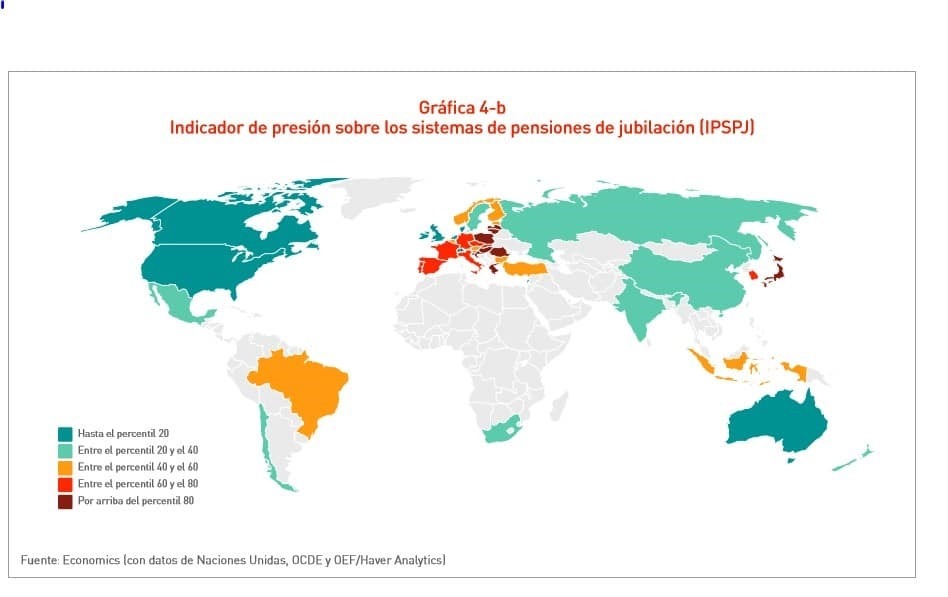
The results of this analysis show that Western Europe, together with Japan and South Korea, are the regions showing the greatest pressure, with the systems of Eastern Europe and Greece in the top positions, followed by countries such as Italy, France, Portugal or Spain with high levels of pressure for reform, the latter basically due to the demographic evolution and other indicators related to their sustainability, coupled with the scarcity of assets in retirement plans.
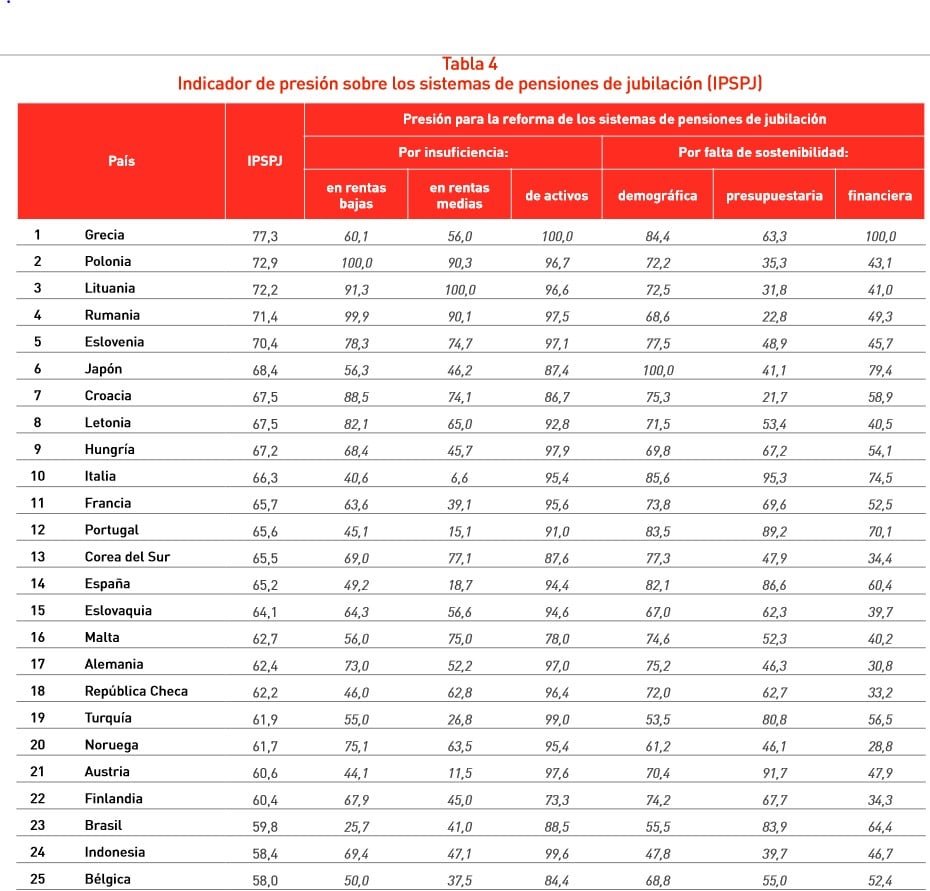
In Latin America, the Chilean and Mexican systems show a moderate level of pressure, basically stemming from indicators of pension inadequacy for low and middle incomes. In Brazil, the pressure for reform is somewhat greater (although moderate, partly because part of the reform has been undertaken in recent years), and stems from factors related to budgetary and financial sustainability, as well as insufficient assets in retirement plans.
The demographic factor is a consequence of the dramatic falls in fertility rates, combined with the generalized reduction in mortality rates and their positive effect on the life expectancy of the population reaching retirement age. The current pandemic, the report explains, "does not appear to be sufficient to alter the main conclusion regarding the sustained increase in longevity".
Balance between pillars
Faced with the pressure of demographic, economic and financial risks faced by all pension systems in the world, the reform path that offers the greatest possibilities of providing sustainability and stability in the medium and long term involves "creating a better balance between the different pillars, as a way to redistribute the risks to which these systems are exposed and, ultimately, to better absorb the effects derived from their potential materialization".
From an instrumental point of view, the objective of creating a better balance between risks can be summarized in the following general principles:
-Maintenance and strengthening of a basic social support scheme (Pillar 0), that is, of a minimum solidarity and non-contributory support aimed at those strata of workers who do not manage to complete the working career that would have allowed them access to a contributory pension.
-The rationalization of a first contributory pillar that combines intergenerational solidarity with the effort of individual savings, thus bringing the benefits of the system closer to the individual contributions to it. In this process, measures such as the adjustment of the retirement age (the one that has shown the greatest sensitivity to achieve this objective), together with the adjustment in contribution rates, constitute the two essential tools.
-Generation of incentives for companies to create and manage (directly, or indirectly through professional managers) complementary pension plans of a contributory type (especially defined contribution) that constitute a supplement to the contributory pensions of the first pillar.
Application of incentives to individual and voluntary medium and long-term savings that workers make through professional managers in financial products aimed at generating income in retirement to supplement pensions from the first and second pillars.
News Source: Adn del Seguro 16/04/2021